
A Brief History Of Bitcoin: From Its Meteoric Rise To The Recent 2022 Bitcoin Crash


As the first cryptocurrency ever created, Bitcoin has been the undisputed leader in the crypto space for many years. Although this digital gold was not immediately noticed by the general public, its price surge quickly caught the attention of financial enthusiasts. In recent years, Bitcoin has managed to maintain its dominance with the largest market capitalization and daily trading volume, despite fierce competition from the growing power of altcoins, NFTs, and other metaverse tokens.
However, blockchain-based digital currency has grown exponentially over the past decade; but the trip was not without incident. Today, Bitcoin's prolonged slump has spooked crypto investors, who have lost over 70% in the past twelve months.
Here is a brief timeline of Bitcoin's monumental rise and fall since its beginnings in 2009.
Before we begin, we would like to point out that historically the price of Bitcoin has moved in "cycles" many times, rising significantly and then immediately falling and repeating itself. Additionally, there has always been "aggressive volatility", where sudden changes sometimes occur within a day or week.
Bitcoin was created in 2009, but had a huge initial boom in 2011 and 2013.
Bitcoin was officially launched in January 2009 by an anonymous person under the pseudonym "Satoshi Nakamoto". The coin appeared during tough financial times, when the global economy was in shambles and people were disillusioned with central banks and governments.
The first Bitcoin transaction was recorded in late 2009, when members of the BitcoinTalk forum exchanged 5,050 Bitcoins for $5.02 through PayPal. However, the first real exchange took place in 2010, when a bitcoin owner paid 10,000 BTC for two Papa John's pizzas for around $25, a thrilling story that still circulates among bitcoin enthusiasts.
Coming back to prices, please note that accurate bitcoin price data has only been available since mid-2010, as there were no relevant exchanges at that time. The price of digital currency continued to fall below $0.40 in 2010. However, it rose sharply in 2011, reaching $30 by mid-year. After that, bitcoin crashed through the end of 2011, ending the year around $4, more than 90% below its all-time high.
After only a difficult and dismal 2012, Bitcoin started to gain momentum again in 2013. In April 2013, it rose to $230 after a noticeable and rapid rally, then fell to $68 and finally ended the year to a monumental amount of $850. .
Of course, 2013 was the most volatile year for Bitcoin as it swung back and forth violently and broke through the $1000 zone for the first time.
Bitcoin showed moderate volatility between 2014 and 2016, falling below $1,000.
2014 was another rocky and rocky year for Bitcoin as it fell to $111 in February, Mt. Gox under the drama. Gox Mountain was one of the first cryptocurrency exchanges to file for bankruptcy after losing over 744,000 Bitcoins of user funds, leading to this massive Bitcoin crash. Although the coin quickly reached $590, it spent the rest of the year without much activity.
2015 also saw little action, with Bitcoin ending the year at $430. The price started rising in mid-2016 and approached the $1000 level by the end of the year.
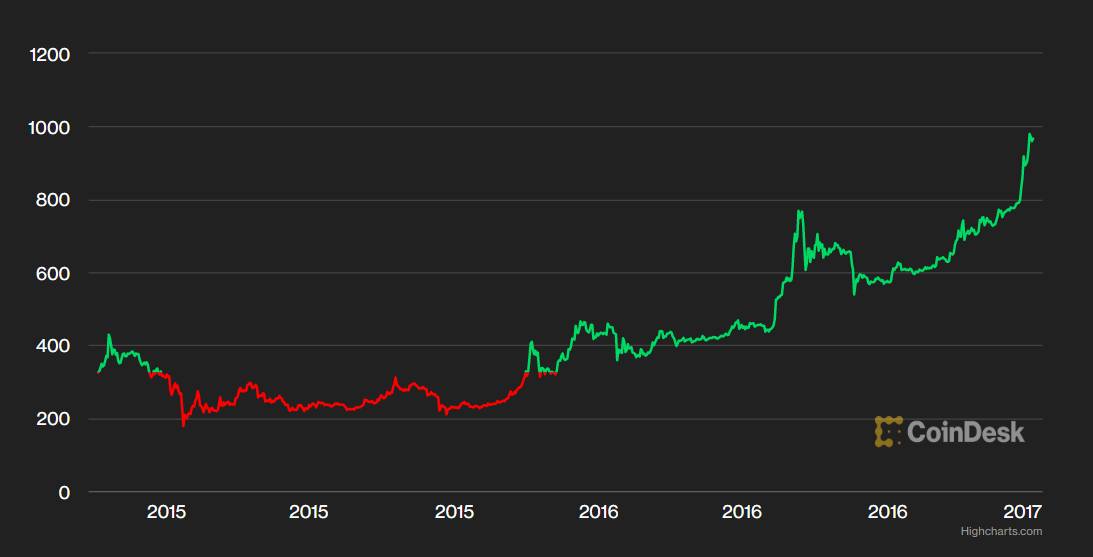
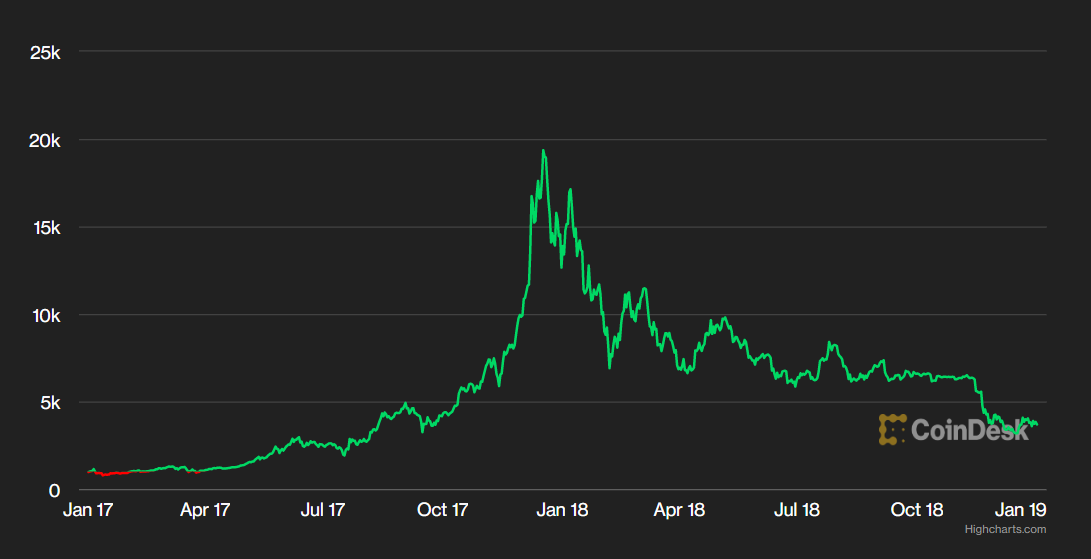
Bitcoin boomed in 2017, but lost nearly 70% of those gains in 2018.
Although Bitcoin entered 2017 modestly, it was a historic year as it surpassed $19,000 in mid-December. It was worth $2,000 in July, but by the end of the year it was worth almost $13,000, an impressive 1,338% annualized.
This massive activity has not gone unnoticed as more and more retailers have rushed to buy Bitcoin, creating a buzz around this digital asset.
Anyone involved in the crypto space should be aware of the Bitcoin Crash or Crypto Winter 2018. By the end of April 2018, Bitcoin had lost almost 50% of its value since the start of the year. Unfortunately, 2018 ended at $3,709, a 73% drop from last year.
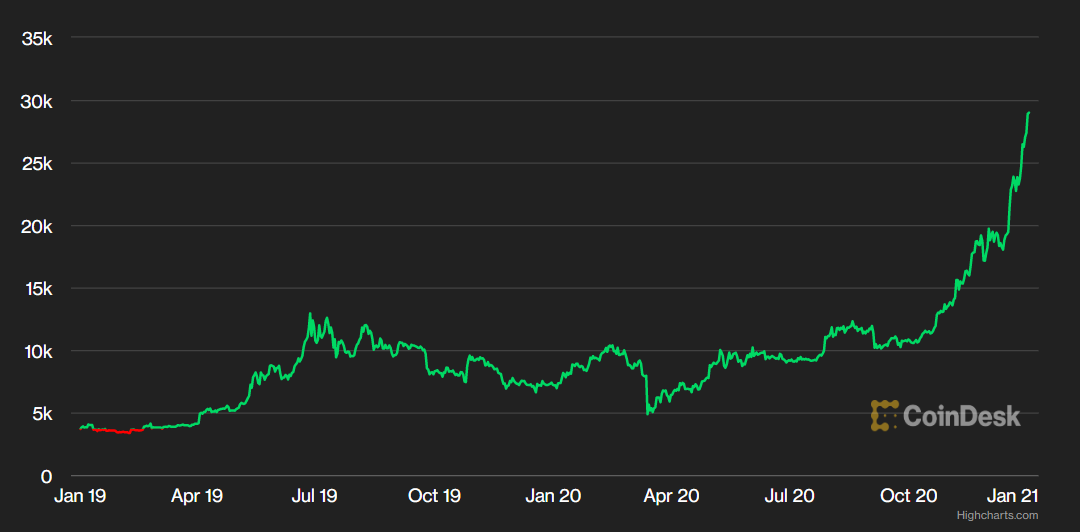
2019 was a cool year for Bitcoin, but it just skyrocketed in 2020.
Bitcoin also struggled in early 2019, but finally started to recover in April when it hit the $5,000 mark. Although the coin crossed the $13,000 mark in 2019, it was unable to sustain its gains and ended the year below $7,200.
During the pandemic wave of early 2020 (March 2020), it fell to $4,800 due to a bigger market decline. However, the decline was temporary as the digital currency hit new highs in the following months. After breaking the $20,000 mark in November 2020, it set a series of all-time highs, trading in the $29,000 region by the end of the year.
Bitcoin Reaches All-Time Highs in 2021 During the COVID-19 Wave
Last year's steam didn't dissipate as Bitcoin entered 2021. It could be called a monumental year for digital gold when it hit "twice". The cryptocurrency soared to an impressive high of $64,000 in mid-April after a period of rapid growth, but lost more than 50% shortly after news of a cryptocurrency crackdown in China .
However, the digital coin once again defied all odds and reached a high of $68,789 in November 2021.
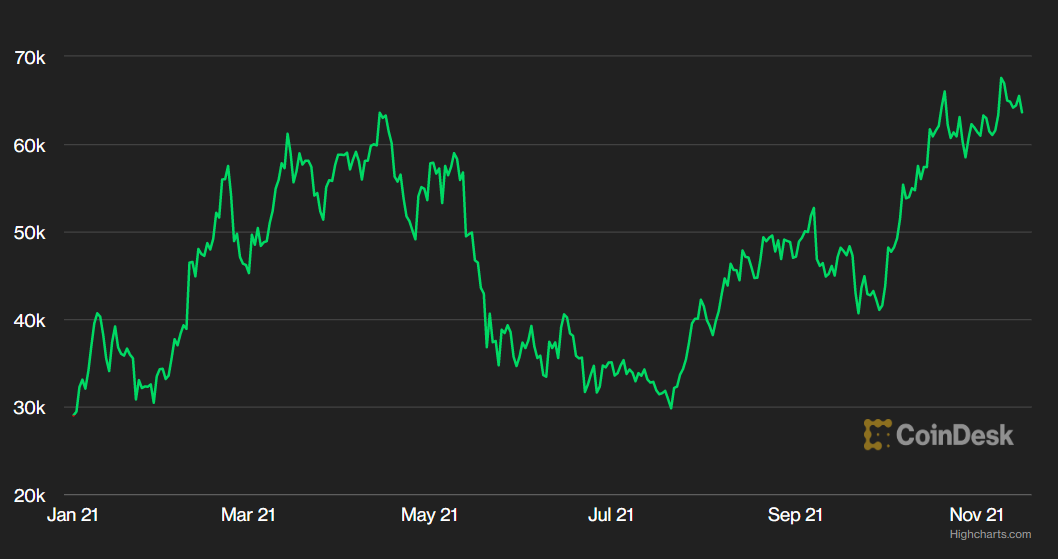
November 2021 to present - Bitcoin falls amid monetary policy and cryptocurrency bans.
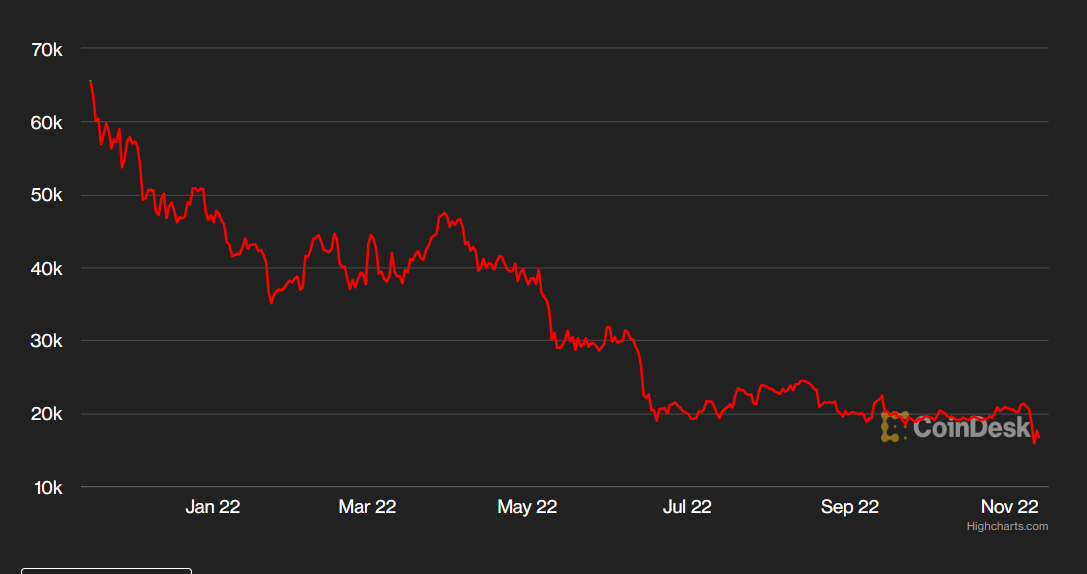
When the Federal Reserve screwed up in late 2021, it triggered another round of Bitcoin crashes. Amid decades of high inflation, geopolitical tensions and macroeconomic instability, market traders have begun to dump stocks and risky assets such as cryptocurrencies, including Bitcoin. Since then, the price has fallen significantly and the unfortunate decline has continued throughout 2022, even as we approach the end of this year.
Sadly, 2022 may be remembered as one of the darkest years in financial history, with major stocks plummeting and Bitcoin plummeting to levels not seen since 2020 this calendar year. Despite a short bull run and attempts at recovery, the digital coin failed to regain its upward momentum and is currently hovering around the $17,000 level.
Where can Bitcoin go? Will he fall further or regain his lost glory? Time will show us.